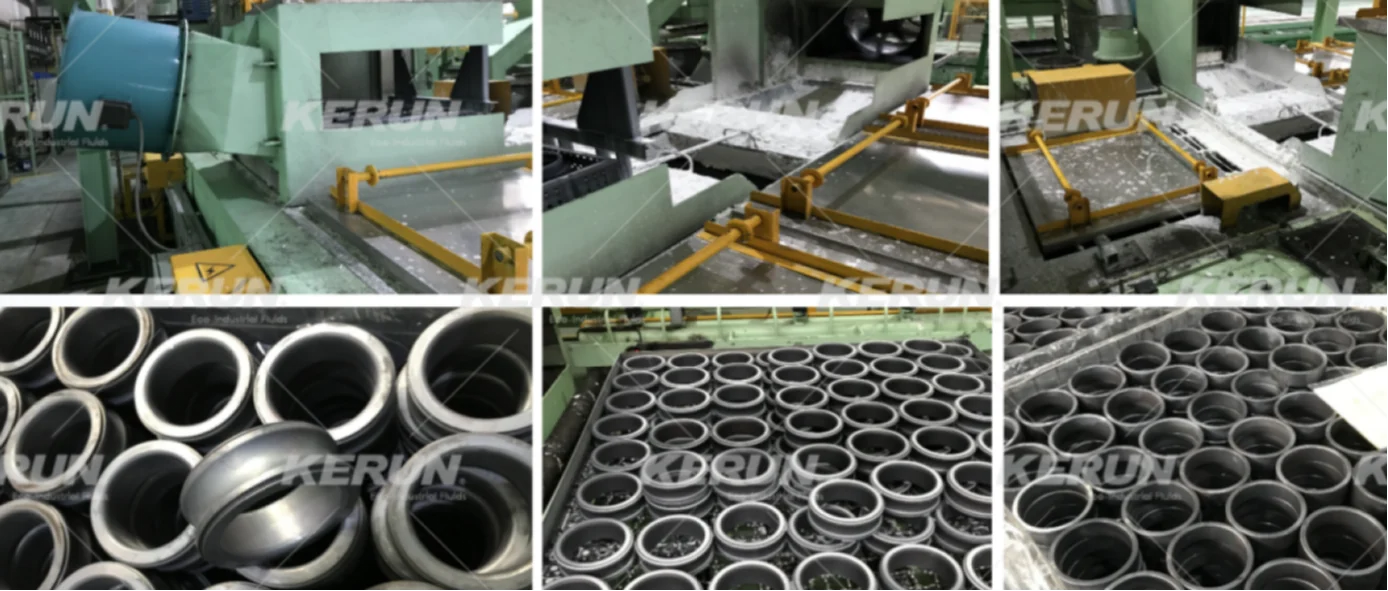
In the heat treatment industry, salt bath quenching has long been favored in sectors such as bearings, automotive components, tools, and construction machinery for its advantages of uniform cooling and controlled deformation.
However, achieving a truly stable, controllable, and long-term operational salt bath system requires the combined assurance of media quality, cooling behavior, and on-site maintenance.
With years of expertise in quenching media, Nanjing Kerun Industrial Media Co., Ltd. (Kerun) has developed the KR1129 salt bath quenching medium, now operating stably across numerous large-scale production lines.
From raw material control and cooling data to process application and maintenance systems, KR1129 has undergone extensive practical validation — making it the standard choice for many manufacturing enterprises.
PART 01
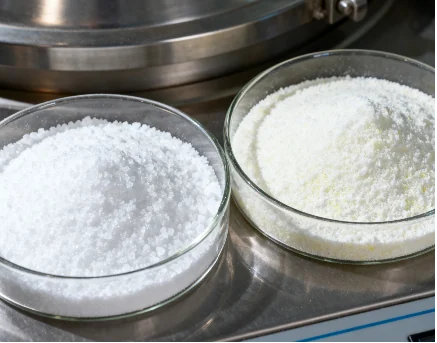
Stable Quality – Every Batch Under Strict Control
While KR1129 adopts the widely accepted 50:50 formulation in the industry, its strength lies not in the formula itself but in standards and consistency.
Each batch of raw materials must pass incoming inspection to ensure:
-
Higher purity
-
Lower impurity content
-
Better inter-batch consistency
-
Less slag and easier bath maintenance
KR1129 is produced in strict accordance with JB/T 13347 quality standards, making it highly suitable for large-tonnage and long-cycle operations in pit furnaces and multi-purpose furnaces.
PART 02
Visualized Cooling Mechanism – From Experience to Data
KR1129 is not a product of empirical adjustment, but a systematic solution derived from mechanism-based research and experimental data conducted by Kerun’s R&D team.
1. Clearly Defined Cooling Behavior
Through extensive experimental studies, Kerun systematically analyzed the cooling characteristics of salt baths under various conditions, identifying key influencing factors such as:
-
Specific heat, density, and viscosity of the medium
-
Convective heat transfer coefficient at the surface
-
Stirring intensity
-
Bath temperature and moisture content
-
Interaction state between probe and medium
These studies make every change in cooling behavior traceable and explainable.
2. Multi-Condition Cooling Curves for Greater Control
Using the self-developed KR-SQT III cooling characteristic tester and data collected from customer sites, Kerun provides cooling curves for different working conditions, including:
-
Higher salt temperature → lower low-temperature cooling rate, beneficial for deformation control;
-
Higher moisture content → significantly increased maximum cooling rate;
-
Enhanced stirring → shorter overall cooling time;
-
Equipment type differences → distinct cooling performance profiles.
These datasets are applied both in R&D and as process references for customer tuning and optimization.
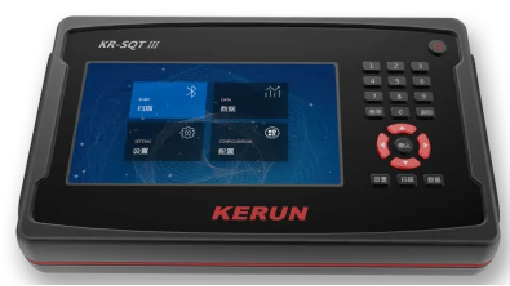
Figure KERUN KR-SQT III Cooling Characteristic Tester (Self-Developed)
PART 03
Proven Industry Applications – Broad Adoption Across Sectors
KR1129 has been successfully implemented across multiple industries, including:
-
Bearings
-
Automotive components
-
Construction machinery and mining equipment
-
Robotic reducers
-
Wind power
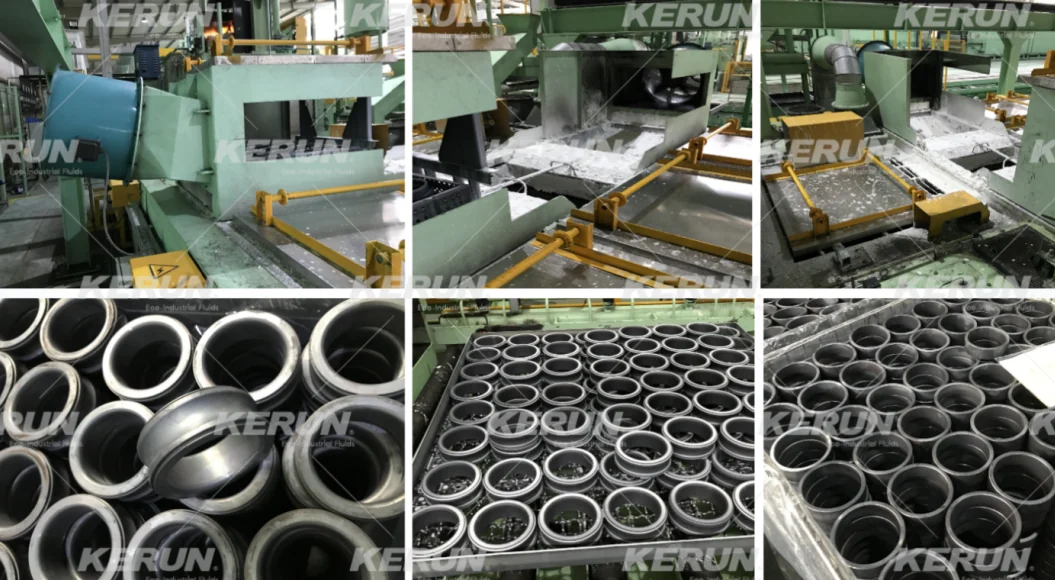
Figure Domestic customer production line
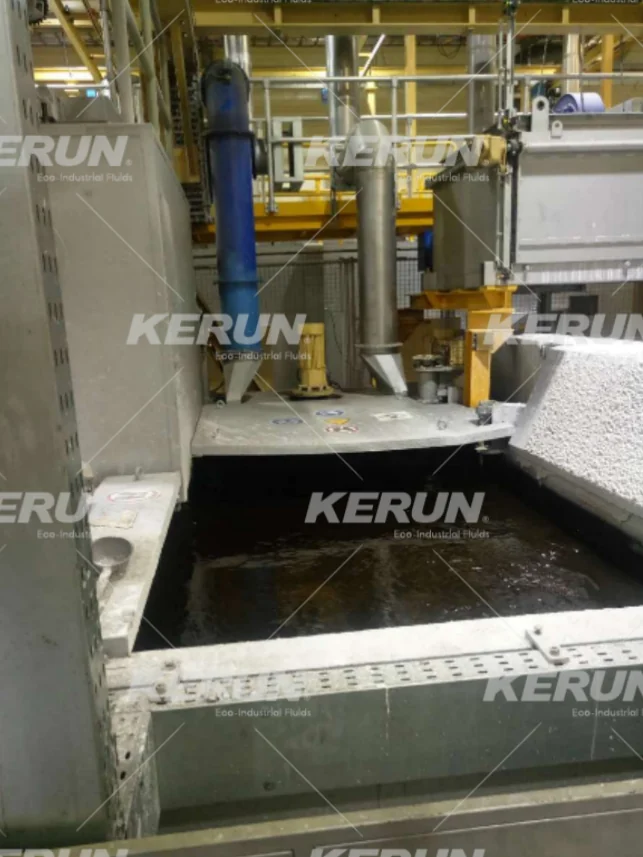
Figure International customer production line
Users operate salt baths ranging from 40 to 500 tons, requiring long operational cycles and high batch-to-batch consistency.
Extensive long-term operating data confirm KR1129’s reliability and stability.
PART 04
Practical Service System – Beyond Products, Complete Solutions
To ensure long-term operational stability, Kerun provides a comprehensive on-site support system, including:
1. Cooling Performance Monitoring
Evaluation of bath temperature, moisture, and stirring to maintain optimal conditions.
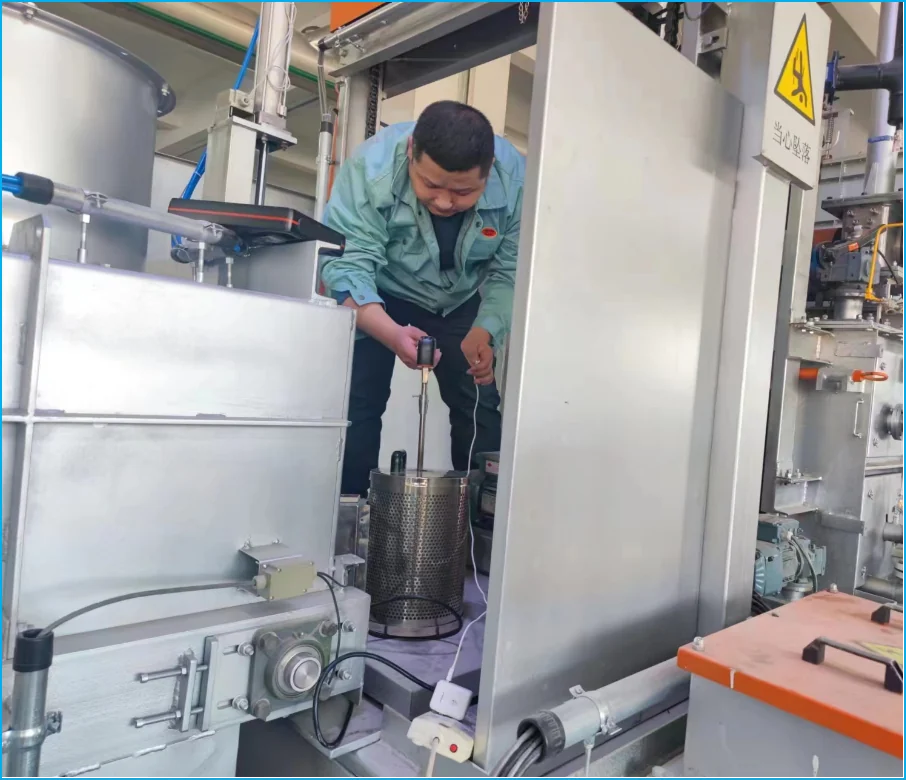
Figure Kerun engineers monitoring cooling performance on site
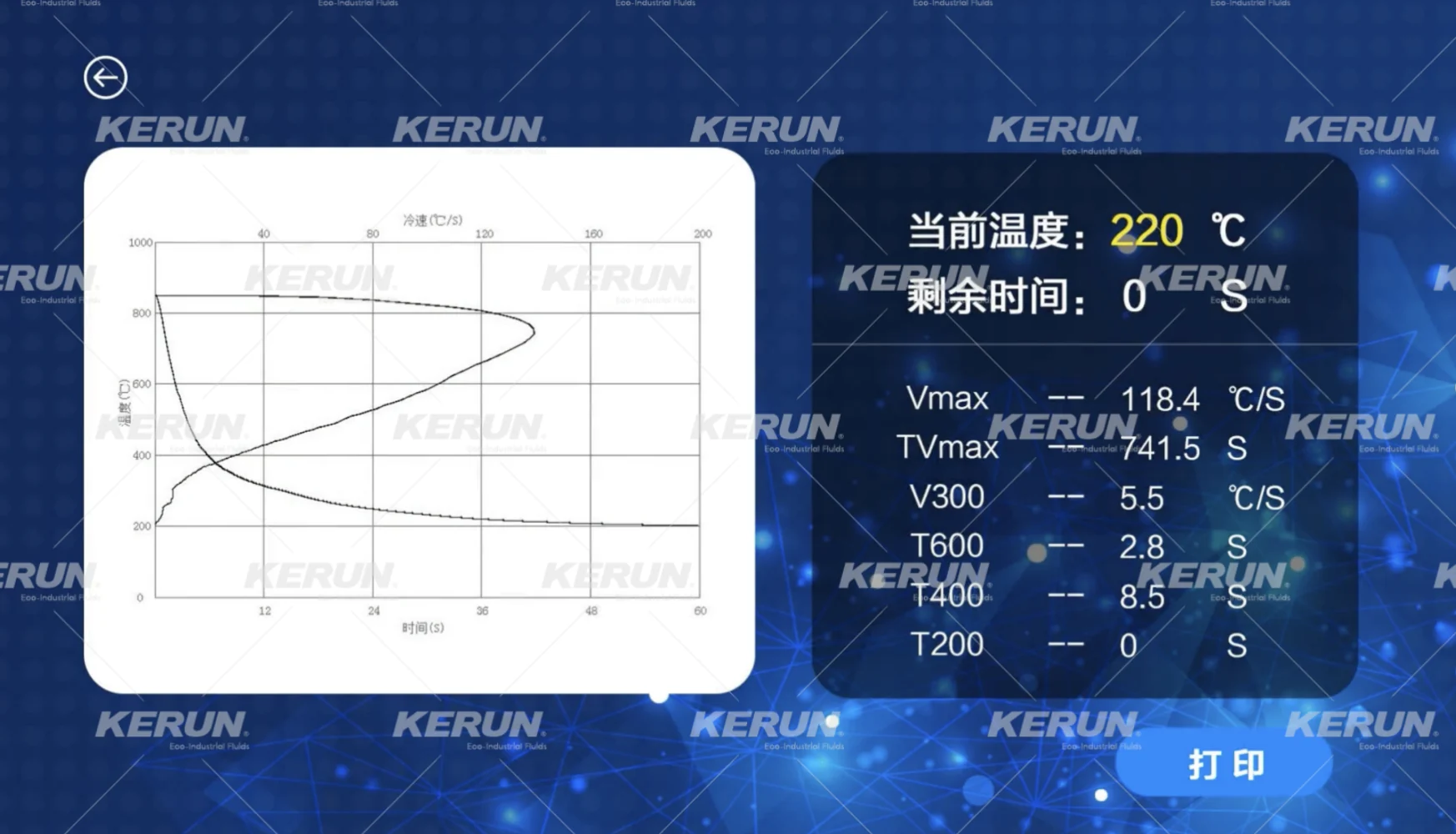
Figure KR-SQT III on-site test of cooling curve in quenching salt bath
2. Composition and Impurity Analysis
Measurement of chloride, sulfate, carbonate, KNO₃/NaNO₂ ratio, and slag content.
3. On-Site Filtration Services
Kerun’s proprietary high-temperature filtration equipment efficiently removes solid impurities, reduces slag formation, extends bath life, and ensures stable surface quality.
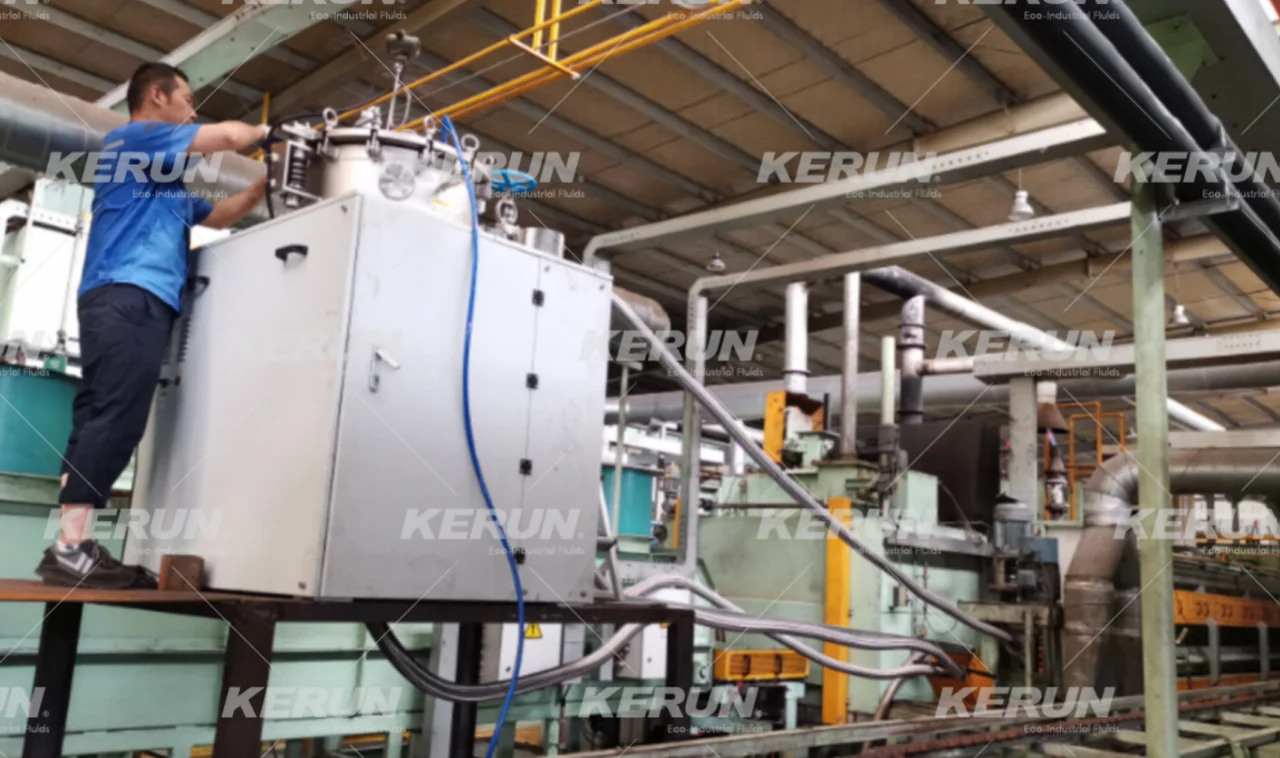
Figure Kerun salt bath purification system in operation
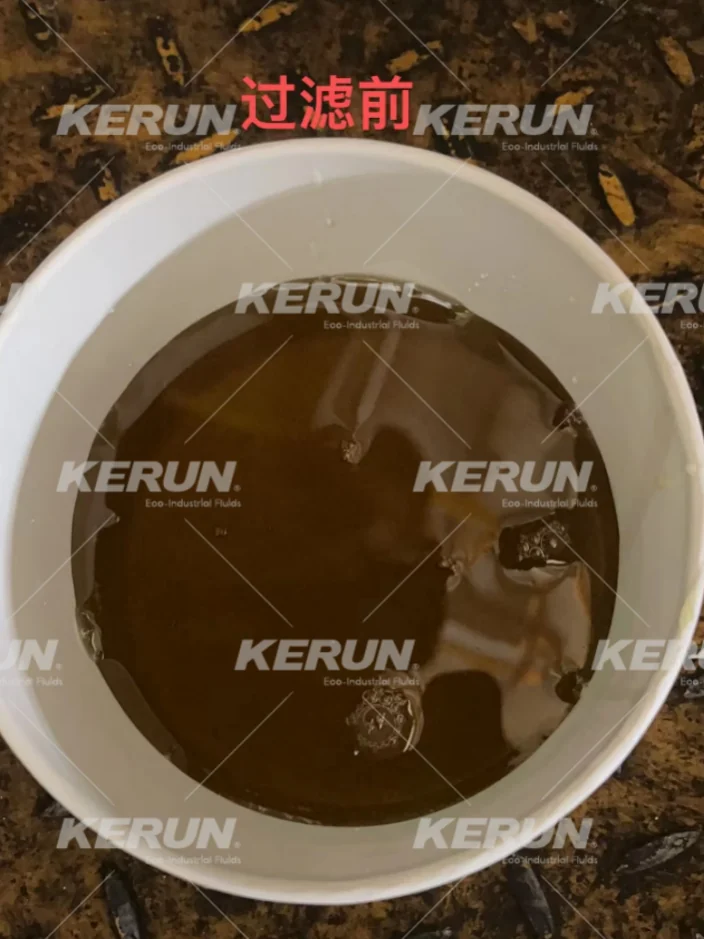
Figure Comparison before and after filtration
Through stable quality control, scientific cooling mechanism research, extensive industry validation, and actionable service systems, KR1129 has helped customers in bearing, automotive, robotics, and construction machinery industries achieve greater process consistency and controllability.
Looking ahead, Kerun will continue to uphold its vision of being a leader in green industrial media, providing the heat treatment industry with more reliable, transparent, and controllable salt bath quenching solutions for a sustainable, high-quality manufacturing future.