Don’t wait until it spoils! Make these preparations one month in advance to keep your production line cool and stable all summer.
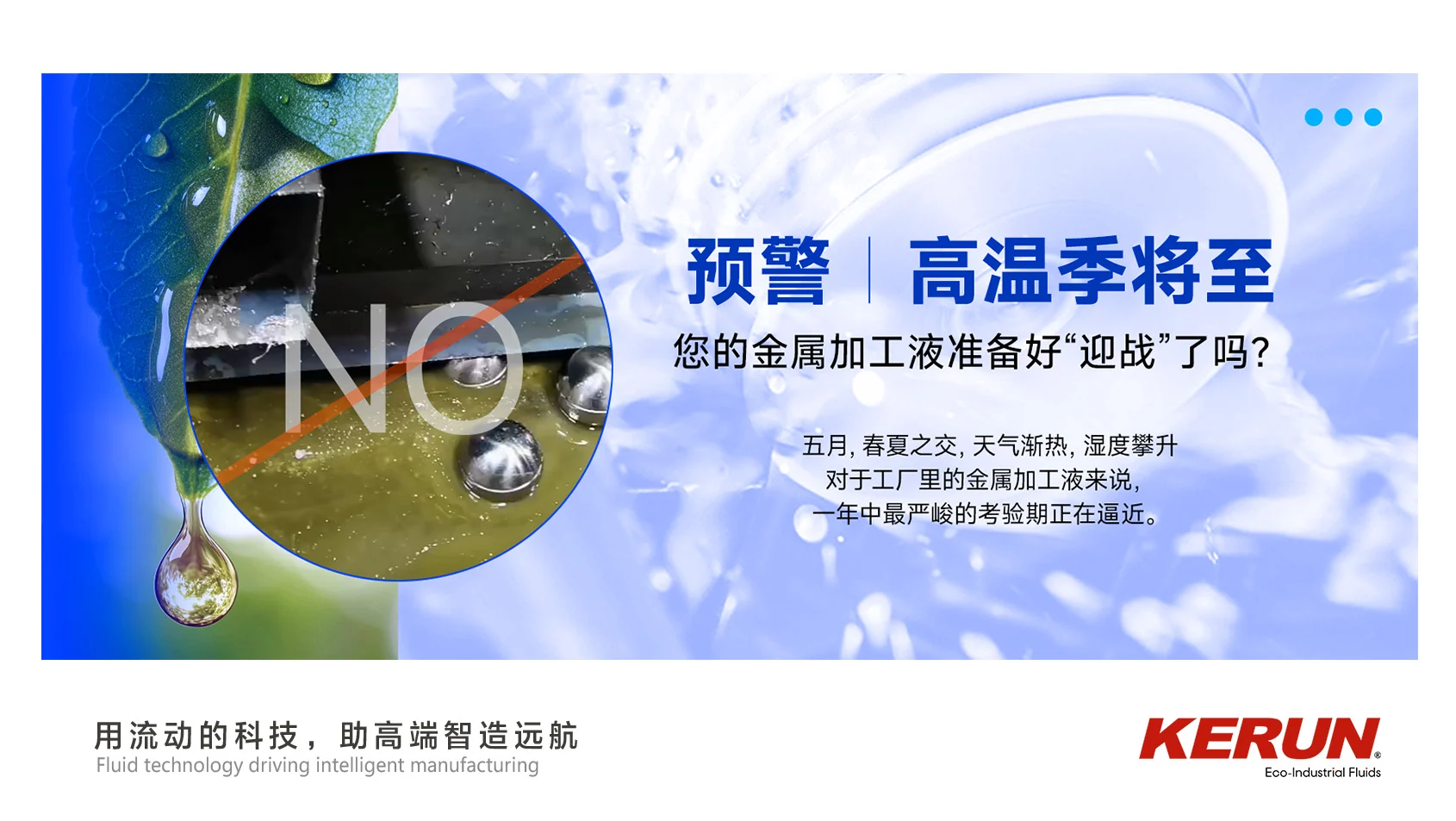
May marks the transition from spring to summer. As temperatures rise and humidity climbs, metalworking fluids in factories face the most challenging period of the year.
Experience shows that waiting to deal with issues such as rancidity, foaming, and workpiece corrosion leads to high costs and directly hinders production schedules and product quality. True wisdom lies in taking precautions before problems arise.
Right now is the perfect time to conduct a comprehensive “check-up” and “strengthening” for your “workshop blood”—metalworking fluids.
Your Metalworking Fluids Will Face a “Systematic Test” in the Next Two Months
As temperatures rise, bacteria become increasingly active, and minor oversights that were once harmless now quietly deteriorate, approaching the threshold of performance failure.
- Oil leakage is inevitable on machining sites. During the high-temperature bacterial bloom, tramp oil serves as a “nutrient source” for bacteria.
- Many machining sites lack oil skimmers or experience intermittent equipment downtime. Tramp oil covering the fluid surface and stagnant fluid create an anaerobic breeding ground for bacteria.
- Rising air humidity greatly enhances the survival and spread of bacteria in the environment, allowing nutrient-rich colonies to spread rapidly across the workshop.
- Without control, machine tools in the machining area will suffer large-scale bacterial contamination and system failure.
After severe bacterial growth, the cutting fluid gradually loses its lubrication, cooling, rust prevention, corrosion inhibition, and cleaning properties, leading to lost machining accuracy, shortened tool life, workpiece corrosion, and other issues.
Four Preventive Maintenance Strategies to Build a “Firewall”
It is better to take proactive measures than to respond passively. Implement the following key measures before the full onset of hot and humid weather:
Strategy 1: Activate the Fluid “Performance Enhancement” Mechanism
Concentration is the first lifeline for fluid stability.
- Increase monitoring frequency: Switch from weekly testing to every 2–3 days, and keep records.
- Set summer safe concentration: Raise the concentration by 2–3% from the original level to improve antibacterial and buffering capacity.
- Standardize fluid replenishment: Never pour undiluted concentrate directly. Always add pre-mixed diluted fluid.
Strategy 2: Launch a “Systematic Eradication” of Pollution Sources
Thoroughly clean pollution sources before problems break out.
- Comprehensive cleaning: Within the next two weeks, completely clean fluid tanks, machine tool trays, filters, and rinsing tanks to remove accumulated chips and sludge.
- Priority oil skimming: Inspect and repair oil skimming devices to ensure effective removal of surface tramp oil, cutting off the bacterial food source.
- Check pipelines: Inspect machine tool pipelines for residual degraded old fluid and flush if necessary.
- Eliminate cross-contamination: Clean tank-side rinsing frames; empty rinsing water each shift to prevent degraded rinsing water from entering the fluid system.
Strategy 3: Predeploy a “Bacteriostatic Management” Process
Establish a preventive barrier before large-scale bacterial outbreaks.
- Preventive bactericidal treatment: Add a bacteriostat at the recommended dosage when the system is relatively clean to establish initial protection.
- Monitor pH value: Maintain pH within the healthy range of 8.8–9.5; a drop in pH is an early sign of spoilage.
- Water quality management: Check mixing water and avoid using hard water or contaminated water.
Strategy 4: Optimize the “On-Site Environment”
Create a favorable external environment for metalworking fluids.
- Ensure ventilation: Maintain good air circulation in the workshop to avoid stuffy, humid local areas.
- Remove stagnant fluid: Drain fluid from idle tanks or maintain a 1-hour daily circulation cycle to prevent long-term stagnation and fermentation.
- Review contingency plans: Confirm that the workshop has ventilation or cooling plans for sudden high temperatures.
Stable production starts with foresight. The stability of metalworking fluids is a cornerstone of smooth summer production, reliable quality, and controllable costs. One preventive investment is far better than ten emergency remedies.
Act now to gain the initiative. Before the real heat arrives, let us work together to build a solid defense line for your production line.